


YCT 1 – Chinese Foundation
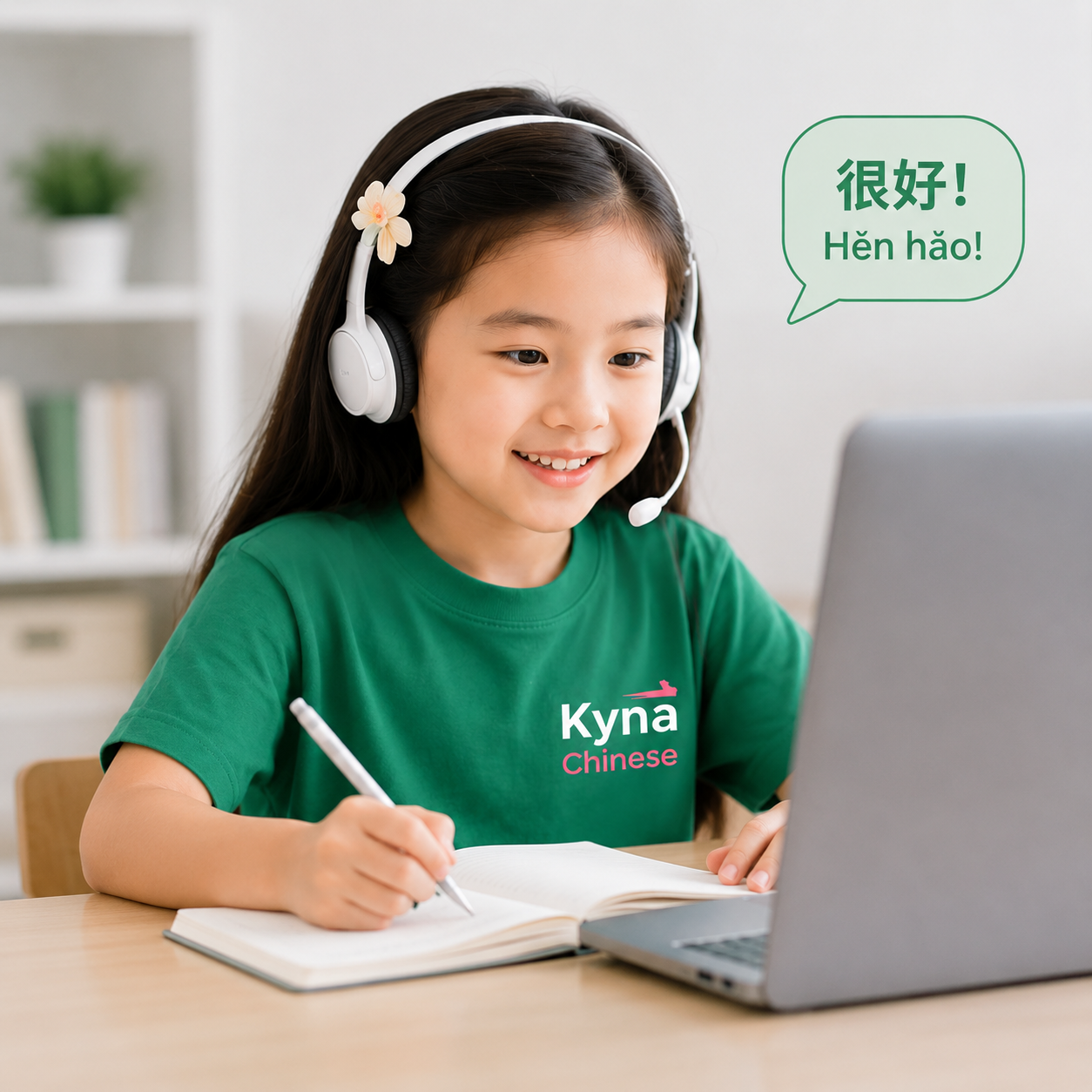
The program is designed for children starting their Chinese language journey, helping them build a clear and correct foundation from the very beginning through a step-by-step, easy-to-follow roadmap.
The lessons combine learning sounds (Pinyin) with everyday speaking, helping young learners get used to the language naturally and start responding comfortably from their very first steps.
By exploring familiar topics like family, school, food, and the world around them, students will steadily learn about 80 basic words, use simple sentences, and build a strong foundation to move up to higher levels.
🎯 Learning Objectives
By the end of the course, students will achieve the following skills:

Vocabulary: Master over 80 core words centered around familiar topics like family, school, animals, and food.
Grammar: Confidently use question structures (who, what, how many, where), negative sentences, and basic descriptive adverbs.
Listening & Speaking: Develop natural reflexes for introducing themselves, asking about the time or date, and sharing personal interests.
Pronunciation: Build a clear and correct foundation in the basic Pinyin system, setting the stage for success at higher levels.
📖 Course Structure
The course is divided into two main stages:

Stage 1 (YCT 1.1)
24 lessons focusing on greetings, numbers, family members, and describing physical appearances.

Stage 2 (YCT 1.2)
24 lessons expanding into animals, places, time, and the world of food.
💡 Teaching Methodology

Learning through Situations:
Sentence patterns are tucked into real-life contexts to help children understand deeply and remember longer.
Building from the Roots:
We focus heavily on Pinyin so children can accurately read and pronounce words on their own.
Interactive Learning:
Students are encouraged to practice speaking constantly through fun, reflex-based questions in class.
🎓 Curriculum Overview
A. Language Skills:
Pinyin:
- Tones: The 4 main tones and the neutral tone (ā, á, ǎ, à, a)
Finals:
- Simple finals: a, o, e, i, u, ü.
- Compound finals: ai, ei, ui, ao, ou, iu, an, en, in, un.
Initials:
- Lip sounds: b, p, m, f.
- Tongue & Throat sounds: d, t, n, l, g, k, h, j, q, x.
- Front & Rolled-tongue sounds: z, c, s, zh, ch, sh, r.
Communication Topics:
- Greetings, saying goodbye, and making new friends.
- Asking about names, nationalities, and ages, and introducing family members.
- Asking and answering about time (hours, minutes), days of the week, dates, and birthdays.
- Communicating in familiar places like school or a shop.
Chinese Characters & Writing:
- Getting to know basic Chinese strokes and what characters look like.
- Recognizing simple words within sentences.
Sentence Patterns:
- Question words: "What" (什么), "Who" (谁), "How many" (几), "Where" (哪儿).
- Questions using the particle "吗" and negation with "不" or "没有".
- Possession with "的" and degree adverbs like "很" (very) and "真" (really).
- Verbs for likes/dislikes: "喜欢" (to like) and "爱" (to love).
B. Lesson Themes:
- The course covers 8 major topic groups:
- Getting Started: Greetings and counting from 1 to 10.
- Personal Info: Name, age, and nationality (Chinese, Vietnamese).
- Family: Family members (Mom, Dad, siblings) and measure words for people.
- Descriptions: Identifying body parts (eyes, nose, ears, hands...) and describing height or build.
- Animal Friends: Pets like dogs, cats, fish, and birds.
- My World: School, shops, and directions like "here" and "there."
- Time & Celebrations: Days of the week, months of the year, and birthdays.
- Food and Drink: Favorite foods like rice, noodles, apples, and cake, plus drinks like milk and water.
