


HSK 5
The program is designed for students seeking high-level proficiency, enabling you to use the language flexibly in academic settings and specialized professional contexts.
Students will expand their advanced vocabulary and grammar, becoming familiar with abstract expressions while refining their ability to present, analyze, and defend viewpoints with logic and coherence. The curriculum covers diverse topics such as economics, sociology, culture, and technology, while simultaneously developing skills in reading specialized documents and writing comprehensive essays.
By the end of the course, you will be able to communicate fluently, engage in in-depth discussions, and possess the necessary competencies to attain HSK 5 certification for study abroad and career advancement goals.
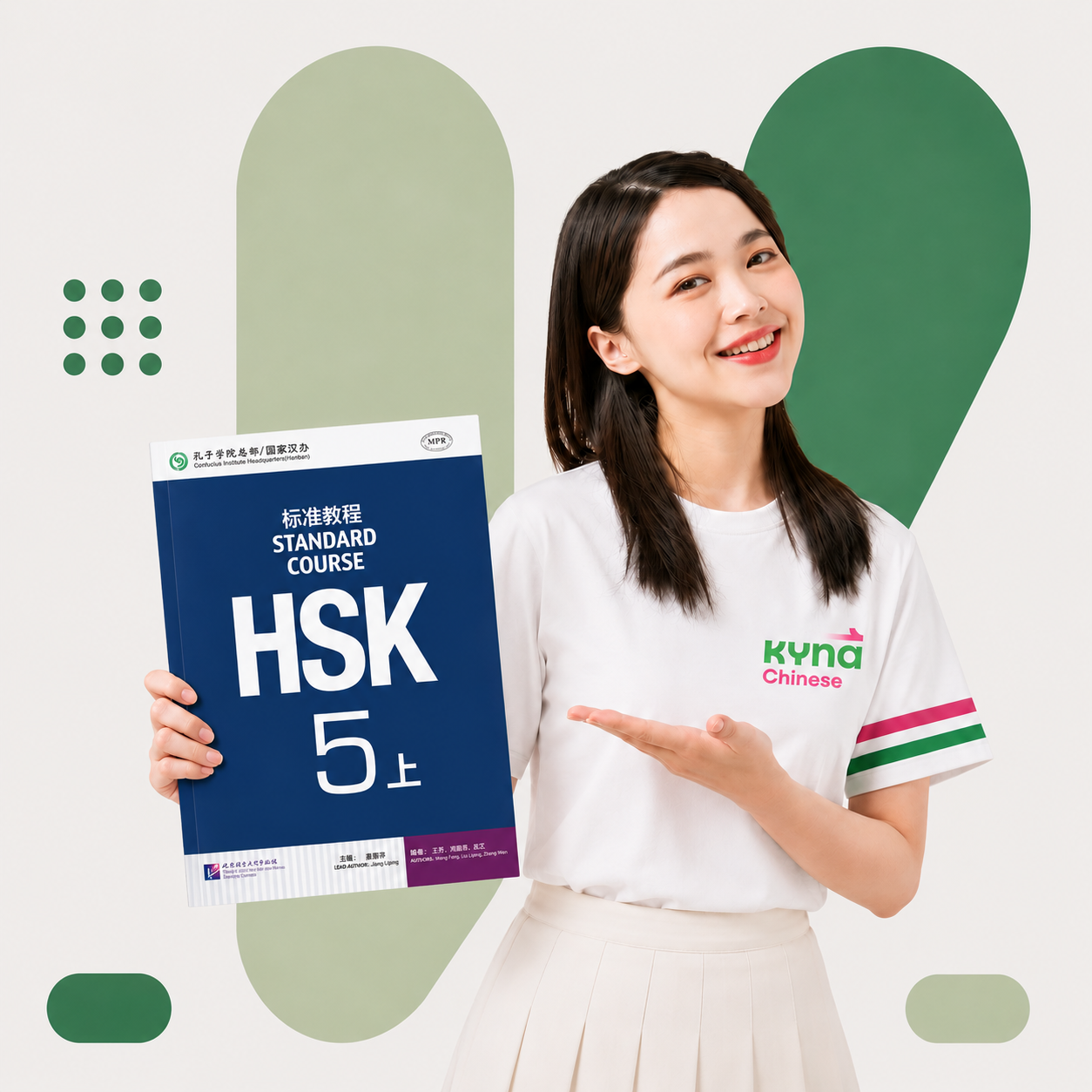
📚 Core Text
HSK 5 Standard Course
Includes 3 Courses:
- HSK 5A
- HSK 5B
- HSK 5C
🎯 Learning Objectives
Upon completing the course, students will be able to:

Communicate fluently across a wide range of topics.
Explain, compare, and defend viewpoints on various academic and social issues.
Vocabulary and Grammar:
✔️ Vocabulary: Acquire 1,300 new words, bringing the total vocabulary to 2,500. This stage marks the transition to advanced Chinese, featuring rich, specialized vocabulary for academic and social contexts.
✔️ Grammar: Focus on complex sentence structures, abstract expressions, and the use of advanced conjunctions, adverbs, and correlative pairs to write coherent paragraphs.Skills:
✔️ Listening: Comprehend extended dialogues, interviews, and formal speeches.
✔️ Reading: Speed-read and understand argumentative essays, news reports, and cultural articles.
✔️ Writing: Arrange sentences into logical paragraphs and write original compositions based on given keywords or images, requiring independent linguistic thinking.
📖 Course Structure

HSK 5A
Enhances vocabulary and grammar while practicing the four skills through themes of human life, family relationships, culture, and historical figures (e.g., Lu Xun, Zi Lu).

HSK 5B
Continues vocabulary and grammar cultivation, focusing on discussions regarding art, science, and volunteer experiences.

HSK 5C
Expands into behavioral psychology, market economics, environmental protection, and the natural world.
💡 Teaching Methodology

Expand word banks and practice using vocabulary flexibly according to specific contexts and communicative goals.

Study and apply grammar points at the upper-intermediate level.

Integrate vocabulary and grammar into simulated exercises across all four language skills.
🎓 General Learning Content
Topics:
- Culture & History: Chinese fables, parables, and the origins of traditional festivals.
- Architectural Heritage: Exploring the structure and cultural significance of Beijing’s Siheyuan (Courtyard Houses).
- Economics & Society: Market economics, debating skills, and global WeChat user trends.
- Behavioral Psychology: The "Foot-in-the-door" effect, the psychology of the "busy person," and the interlink between reading and thinking.
- The Digital Era: Global trends in social media usage and the impact of WeChat.
- Critical Thinking: The correlation between reading culture and independent thought.
- Aesthetics & Art: Engaging in discourse on the beauty and significance of abstract art.
