


HSK 2
The program is designed for students who already have a basic foundation, helping you consolidate your pronunciation and expand your communication skills in familiar daily situations.
Students will accumulate over 400 common words and become familiar with important grammatical structures, such as comparative sentences, the “Bǎ” construction, and patterns for expressing opinions. The curriculum focuses on practical topics like shopping, travel, health, work, and daily routines, helping you develop more natural communication reflexes.
By the end of the course, you will be able to engage in direct exchanges regarding familiar topics, express simple ideas, and be fully prepared to attain HSK 2 certification.
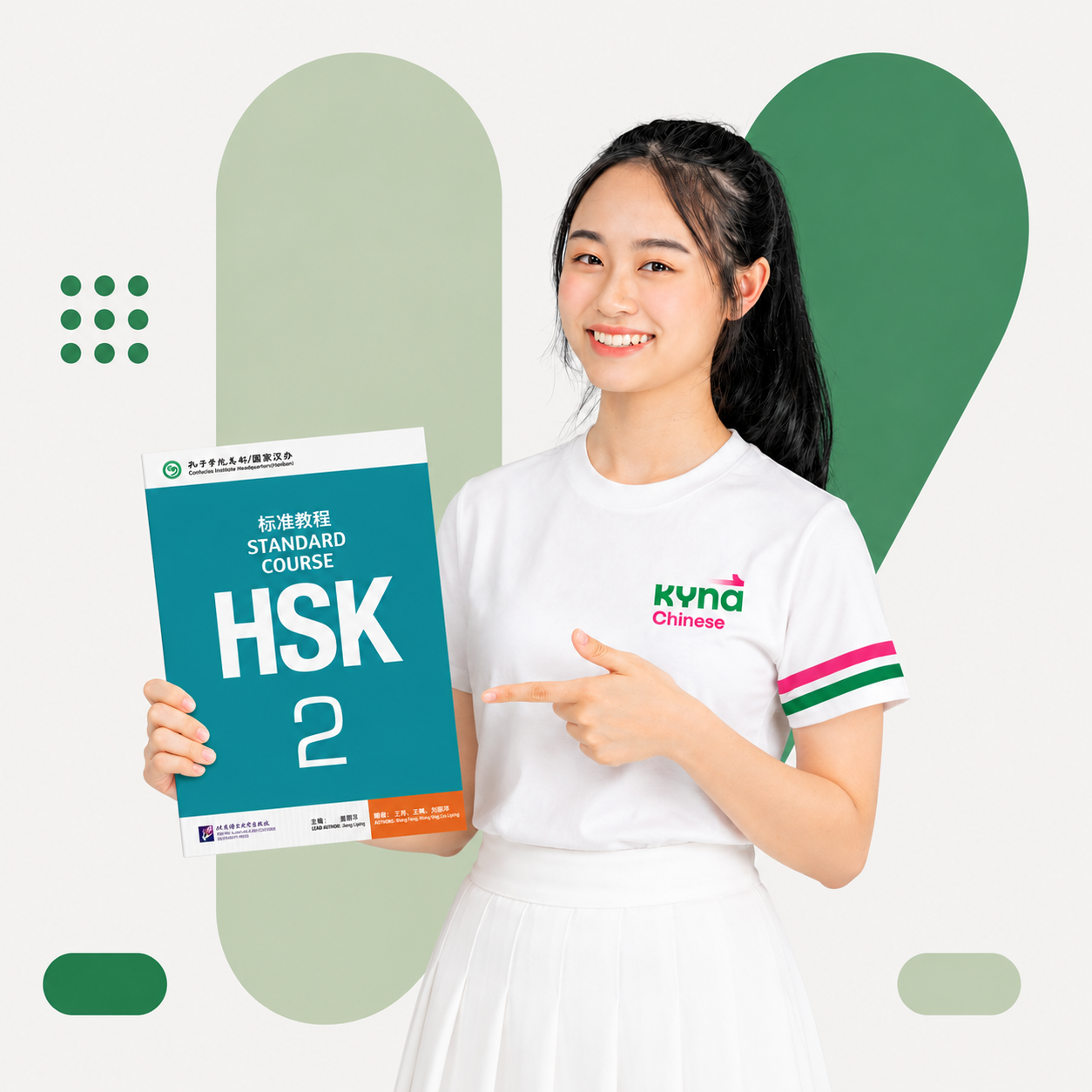
📚 Core Text
- HSK 2 Standard Course
🎯 Learning Objectives
Upon completing the course, students will achieve the following skills:

Communication Competency: Engage in direct exchanges on familiar daily topics such as work, health, travel, and personal habits.
Writing Skills: Accurately handwrite learned vocabulary following correct stroke order rules.
Vocabulary and Grammar:
✔️ Vocabulary: Recognize, read, and write over 400 of the most common words for daily life and work.
✔️ Grammar: A firm grasp of 30 grammatical structures, including comparative sentences, the "Bǎ" construction, and complex aspect particles.
📖 Course Structure
The HSK 2 Content upgrades both the length of conversations and the complexity of grammatical structures:

Increase in complexity of conversation topics
Students go beyond simple answers and begin learning how to provide reasons, make comparisons, and describe states or conditions.

Systematic Approach
The program is divided into 15 major themes. Every 3–4 themes are followed by an intensive review session and a final course examination.
💡 Teaching Methodolgy

Intonation Training
Students practice emphasizing adverbs, attributives, and affirmative/negative components to achieve more natural-sounding pronunciation.
Radical Analysis
Instructors guide students in identifying Chinese radicals (such as the Person, Heart, or Water radicals), helping them build a logical system for recognizing characters.
Spiral Review System
With 8 review sessions integrated throughout the roadmap, students regularly revisit previous knowledge and continuously apply it in subsequent lessons.
🎓 General Learning Content
Topics:
- Colors & Positions: Using descriptive adjectives and directions to identify ownership of objects.
- Travel: Exploring the ideal times for travel and describing famous landmarks in China.
- Health & Exercise: Establishing daily sports habits and discussing healthy lifestyles.
- Careers & Personnel: Introducing colleagues and discussing job opportunities.
- Shopping & Decision Making: Providing product advice, comparing prices, and offering purchasing recommendations.
- Places and Directions: Asking for directions and estimating geographical distances and transportation modes.
- Personal Opinion and Expression: Expressing thoughts, considerations, and providing feedback on surroundings.
- States & Comparisons: Describing ongoing actions and comparing characteristics between different subjects.
